Why Sleep Temperature Matters: A Guide to Cooling Mattress Pads
You choose a supportive mattress, comfortable pillows, and soft sheets. Yet a bed that becomes too warm can still leave you tossing, turning, and pushing the covers away.
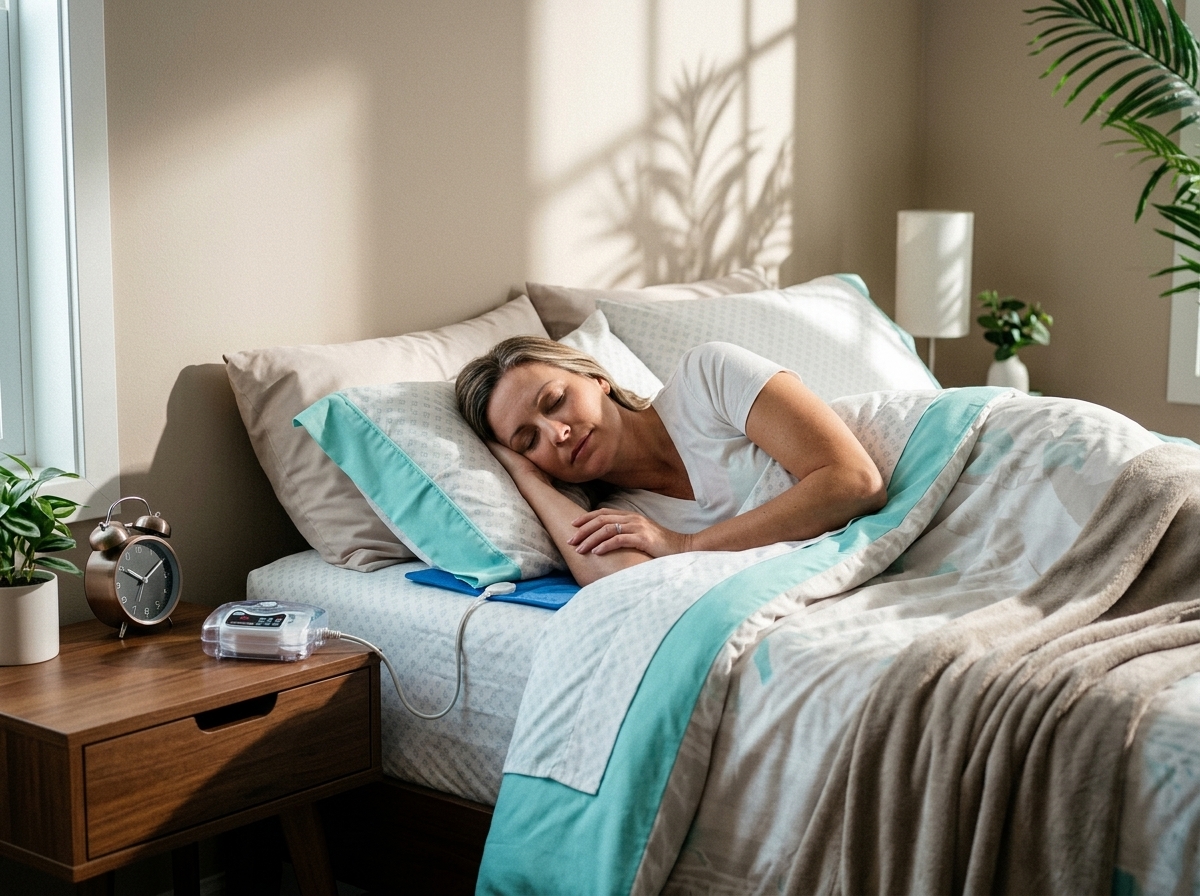
Temperature deserves a place in your sleep routine alongside light, noise and a consistent bedtime. A cooling mattress pad offers a way to adjust the surface beneath you without replacing your mattress.
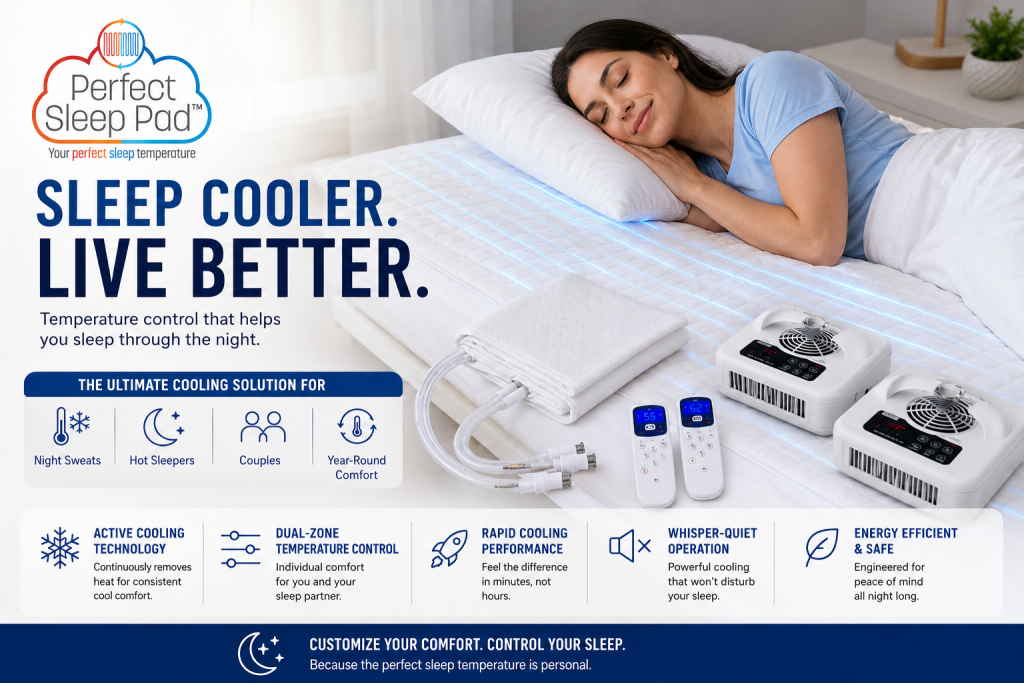
At Perfect Sleep Pad, our focus is personalized bed temperature: circulating water through a mattress pad to provide cooling or warmth where you sleep.

How does temperature affect sleep?
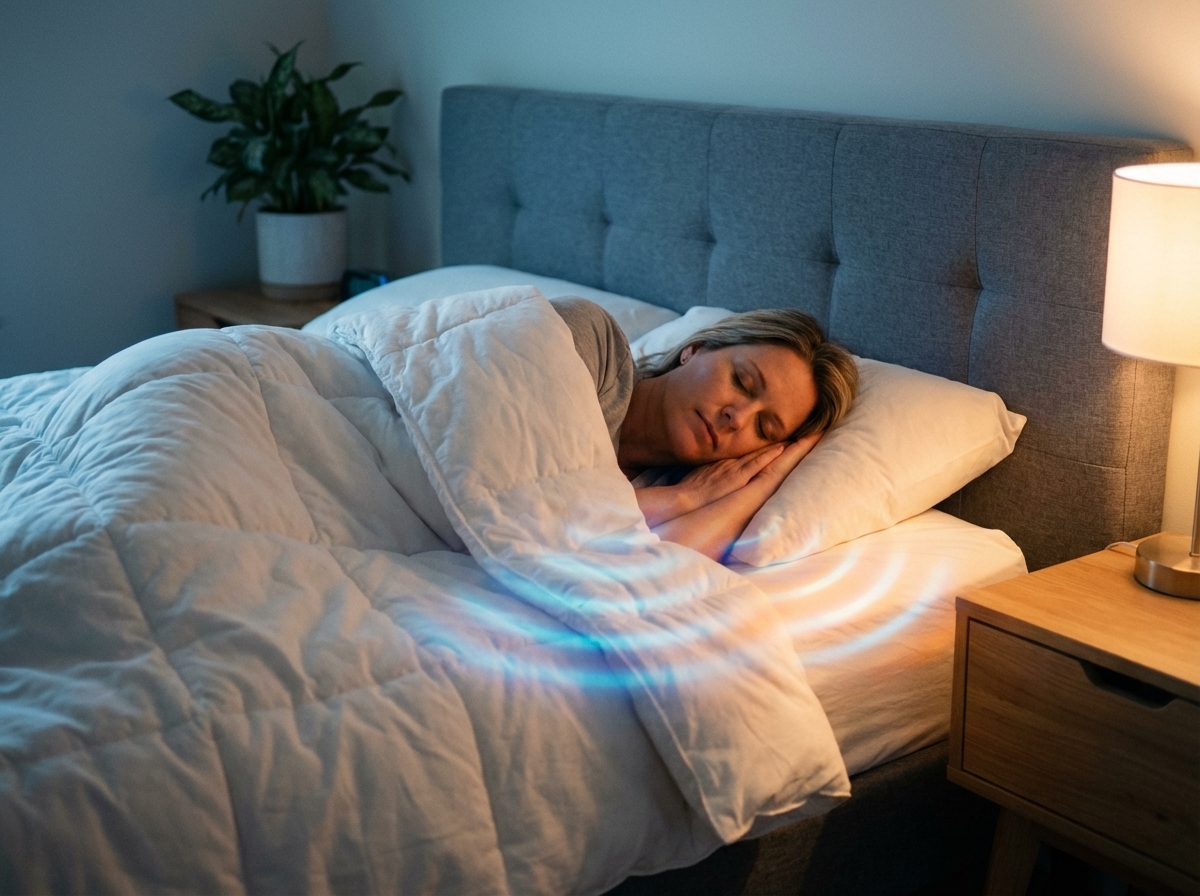
Your body’s temperature regulation and sleep are closely connected, and your temperature naturally follows your circadian rhythm. But the relationship is more subtle than ‘the colder, the better.’ Skin temperature, heat loss and the surrounding environment all play a role.
In a 2008 study published in Brain, researchers used a temperature-controlled suit to gently warm participants’ skin. They found less nighttime wakefulness and a shift toward deeper sleep, without changing core body temperature. This illustrates why comfortable temperature regulation matters, and why cooling everyone as much as possible is not the goal.
Deep sleep and REM sleep are different stages. Research on temperature should not be interpreted as a promise that a particular mattress pad will increase either one.
The practical aim is a bed that feels comfortably balanced: neither so warm that you keep removing covers nor so cold that you tense up or reach for extra layers. For more on the research, see our guide to the science of temperature and quality sleep.
Why can a bed feel cool at first and warm later?

Room temperature is only part of your sleeping environment. Clothing, bedding and the mattress help shape the conditions immediately around your body. Even a small change, such as lowering the thermostat, only addresses the room.
A 2019 randomized crossover study of sleepwear found that fabric choice affected some sleep measures in older adults sleeping under warm laboratory conditions. It did not establish a universal ‘best’ fabric, but it demonstrates that what surrounds your body can influence sleep.
Humidity matters too. In a 2005 laboratory study of humid heat exposure, participants experienced more wakefulness late in the night when conditions changed from a cooler, less humid environment to a hotter, more humid one. The study was small and used substantial environmental changes, so it should not be treated as a precise thermostat recommendation.
If your bed becomes uncomfortable after several hours, consider the whole setup: room conditions, heavy bedding, sleepwear and heat accumulating beneath you. Our posts on why your bed feels hot even when the room is cool and why hot sleepers wake up overheated go deeper on this.
How does a water-circulating cooling mattress pad work?

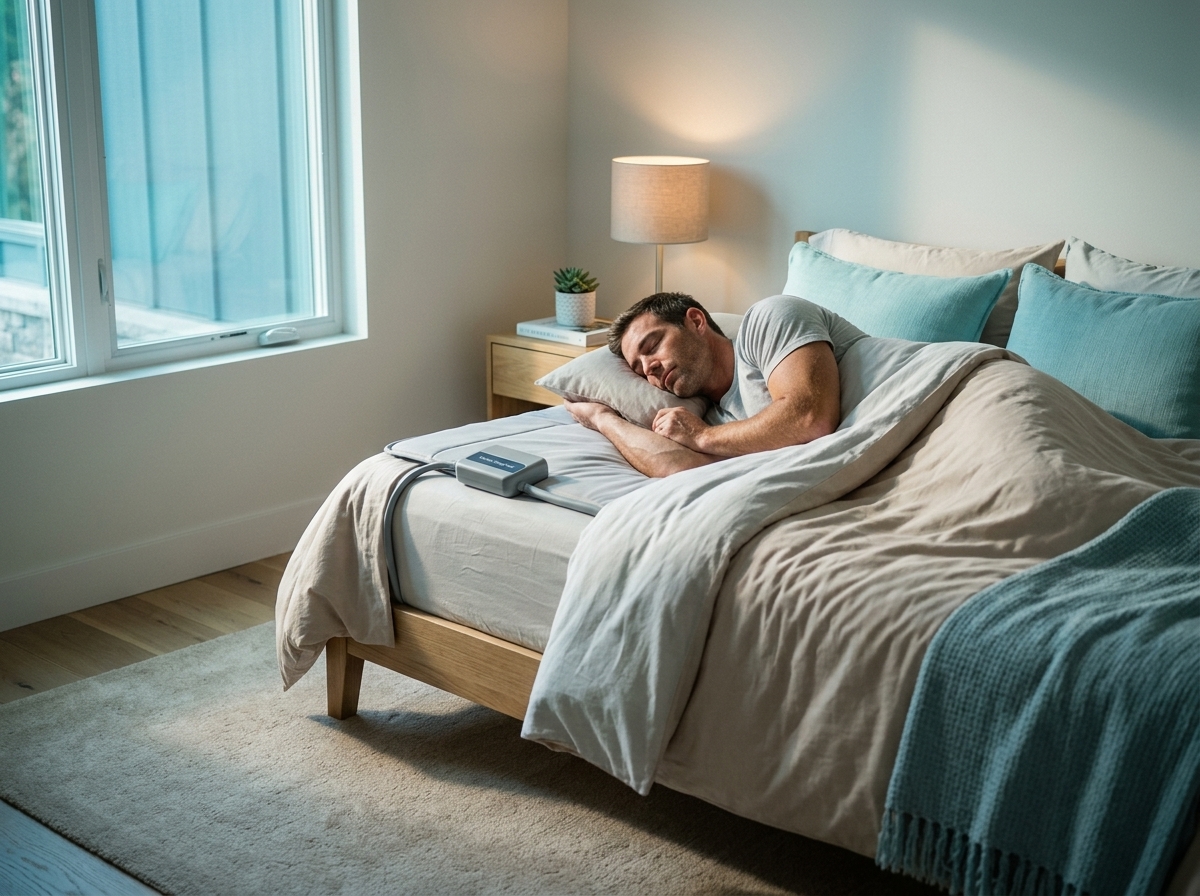
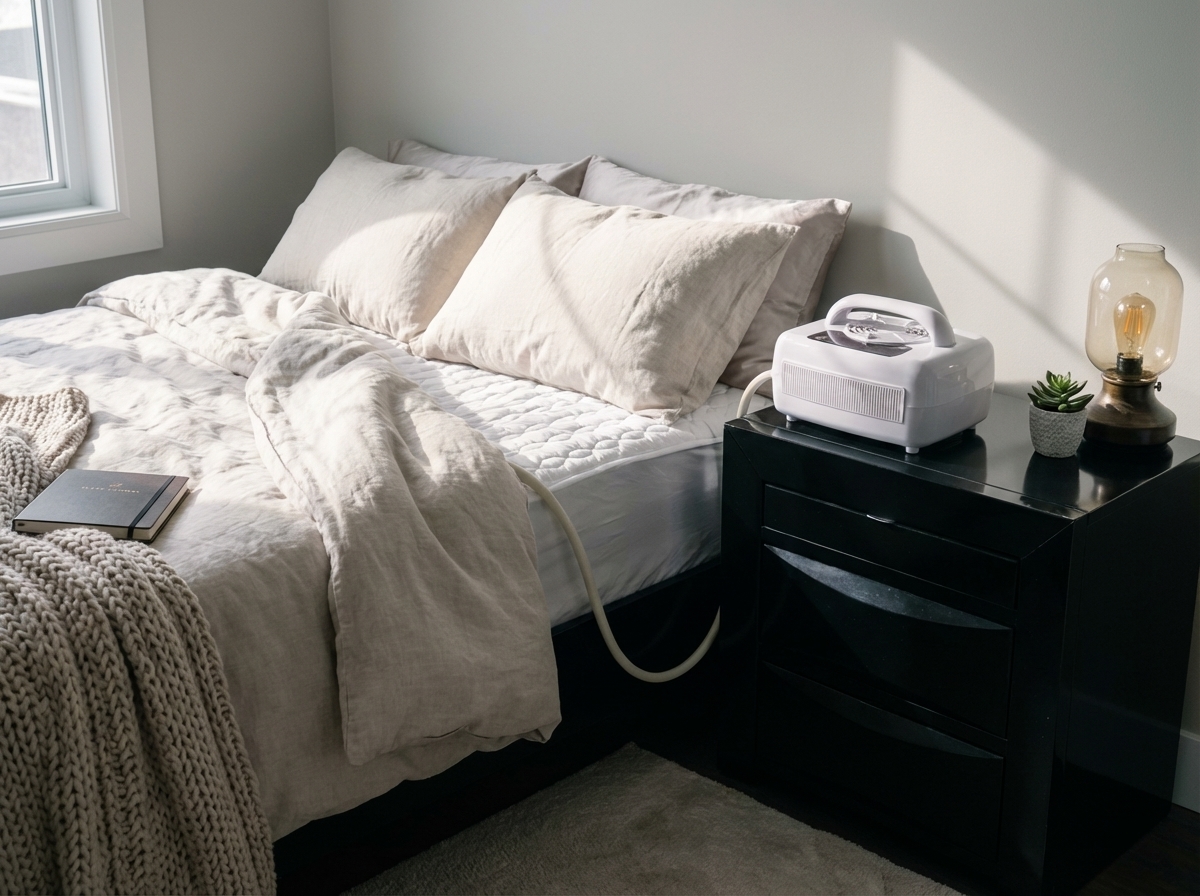
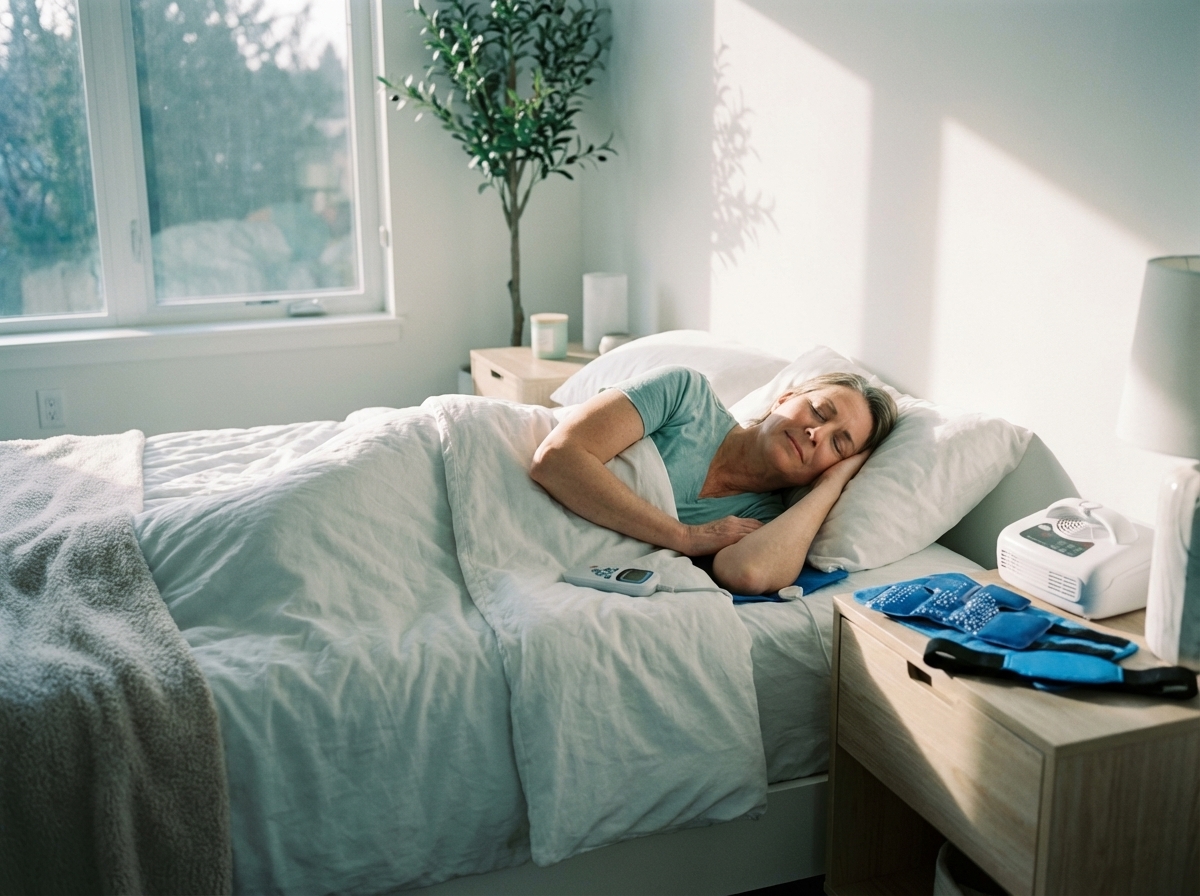
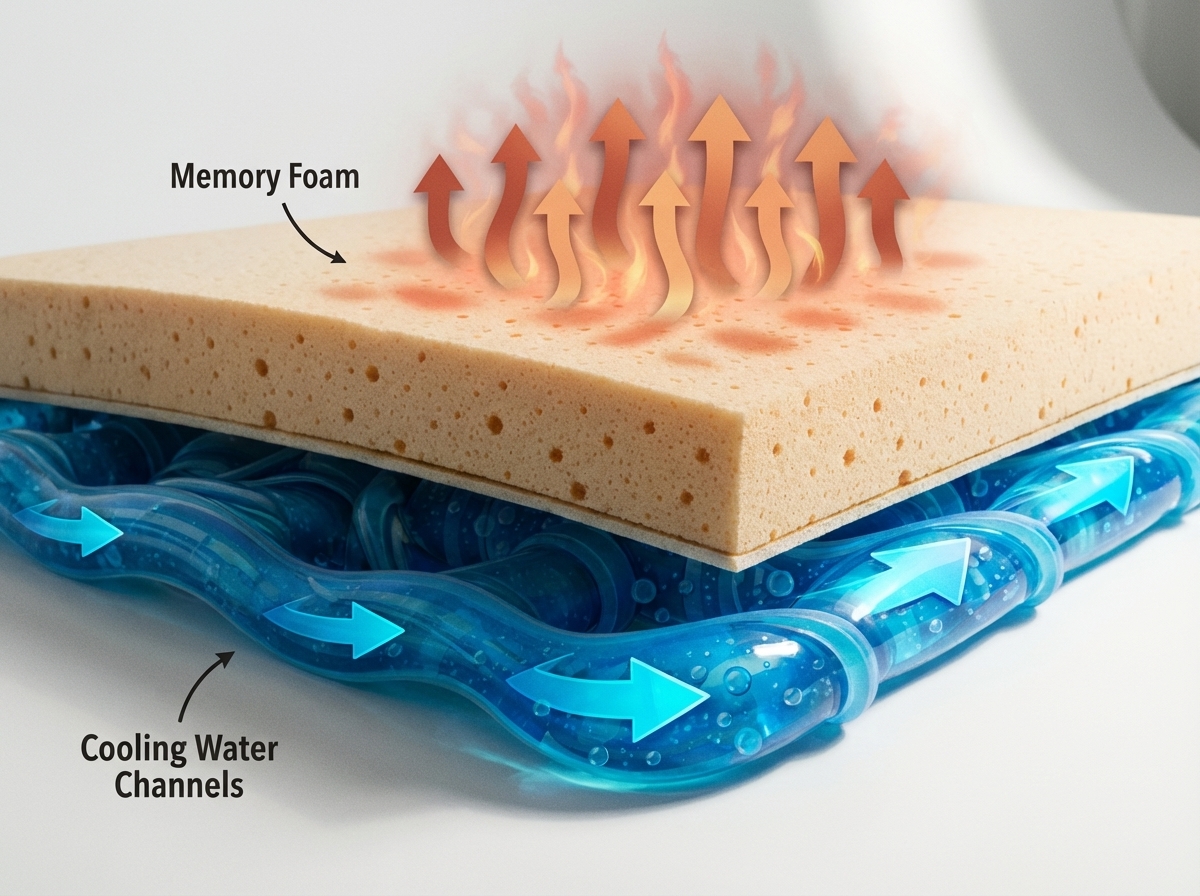
Perfect Sleep Pad circulates water through soft tubing in a pad positioned beneath your fitted sheet. A separate bedside control unit heats or cools the water before sending it back through the pad. (For a step-by-step explanation, see how a water cooling mattress topper works.)
When the circulating water is cooler than the skin in contact with the bed, it can absorb heat and carry it back to the control unit. In heating mode, warmer water supplies warmth to the sleeping surface.
A reservoir sensor monitors water temperature, and the unit adjusts heating or cooling to work toward your selected setting. This is water temperature control; it does not directly measure your core body temperature.
The system offers both heating and cooling, with dual-zone options for partners who prefer different bed temperatures. You can explore the available configurations on the King and Queen pages.
Cooling sheets, fans or an active bed cooling system?
Each approach changes a different part of the sleeping environment.

- Lighter bedding and suitable sleepwear can help you adjust insulation and moisture comfort.
- Fans move air and can improve comfort, depending on room conditions and bedding. See why a fan isn’t always enough for hot sleepers.
- Air conditioning changes room temperature and can help manage humidity.
- Water-circulating mattress pads actively heat or cool the surface beneath you. Here is how water-activated pads compare with traditional mattress pads.
These approaches can work together. A bed cooling system does not dehumidify a room or replace air conditioning when the room itself is excessively hot.
Research into temperature-controlled beds is promising, but results depend on the design being tested. A 2022 proof-of-concept study examined a specialized mattress and pillow combination using different warming and cooling zones. That research supports further investigation of thermal sleep environments; it is not a clinical trial of Perfect Sleep Pad.
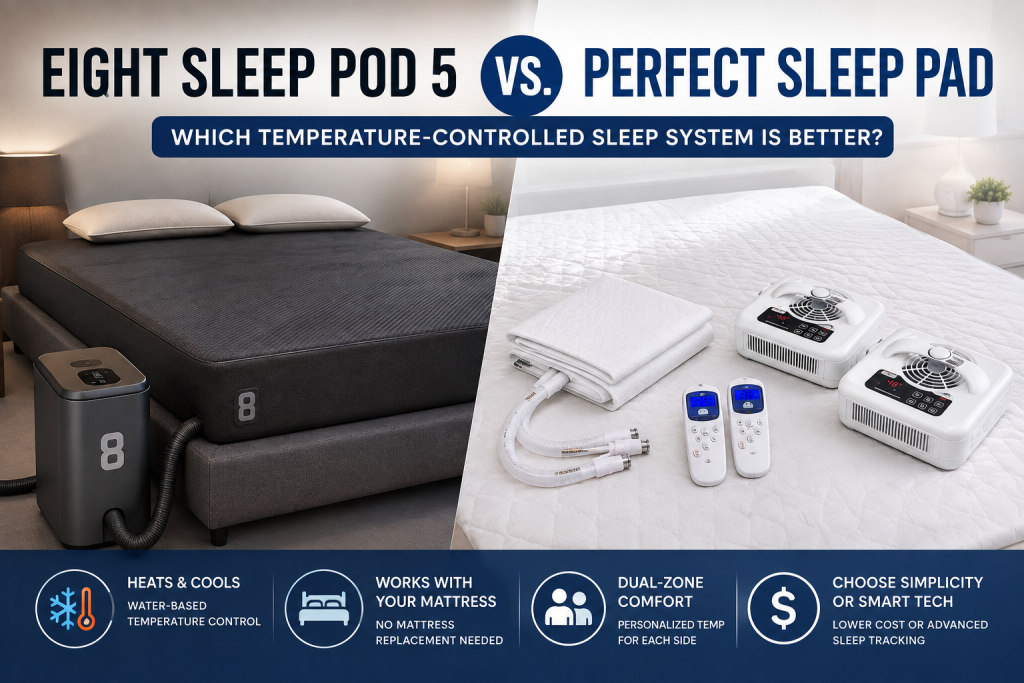
If you are comparing active systems, read our side-by-side posts: Perfect Sleep Pad vs Eight Sleep and Chilipad vs Perfect Sleep Pad.
Personalized comfort for couples and hot sleepers

One partner may want a warmer bed while the other keeps throwing off the covers. Separate temperature zones offer a practical way to accommodate those preferences while sharing a mattress.
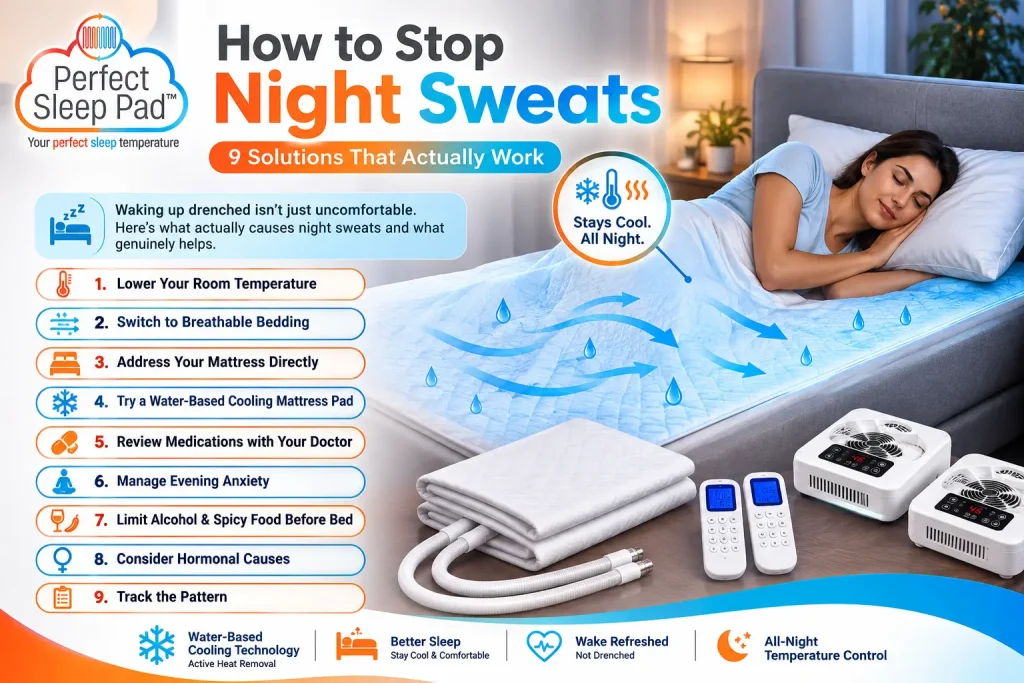
For people who experience nighttime temperature discomfort during menopause, the aim is improved comfort in bed. A cooling pad does not treat the hormonal cause of hot flashes or guarantee that night sweats will stop. See our overview of cooling solutions for menopause night sweats.
The same distinction applies to athletes and anyone prioritizing rest: a comfortable sleeping surface can be part of a sleep routine, but it should not be presented as a guarantee of faster recovery. Read more about temperature-controlled sleep and athletic recovery.
How do you find your comfortable bed temperature?
Start with a moderate setting and adjust gradually. Give yourself time to assess how the bed feels with your usual sheets, clothing and blankets.
Keep the surrounding room comfortable, use bedding you can easily adjust, and note whether temperature discomfort is actually what wakes you. Persistent or unexplained night sweats deserve a conversation with a healthcare professional.
Try Perfect Sleep Pad with a 30-day sleep trial
Reading about bed cooling is useful. Experiencing it in your own bedroom helps you decide whether it suits your preferences.
We offer a 30-day sleep trial so you can see whether this technology is right for you. Review our trial and guarantee information before ordering, see how reviewers rank the best mattress cooling pads, or explore Perfect Sleep Pad.
Frequently asked questions
What is the best temperature for sleep? There is no single number for everyone. Many sleep guides suggest a cool bedroom, often around 60 to 67°F (15 to 19°C), but comfort depends on bedding, sleepwear, humidity and personal preference.
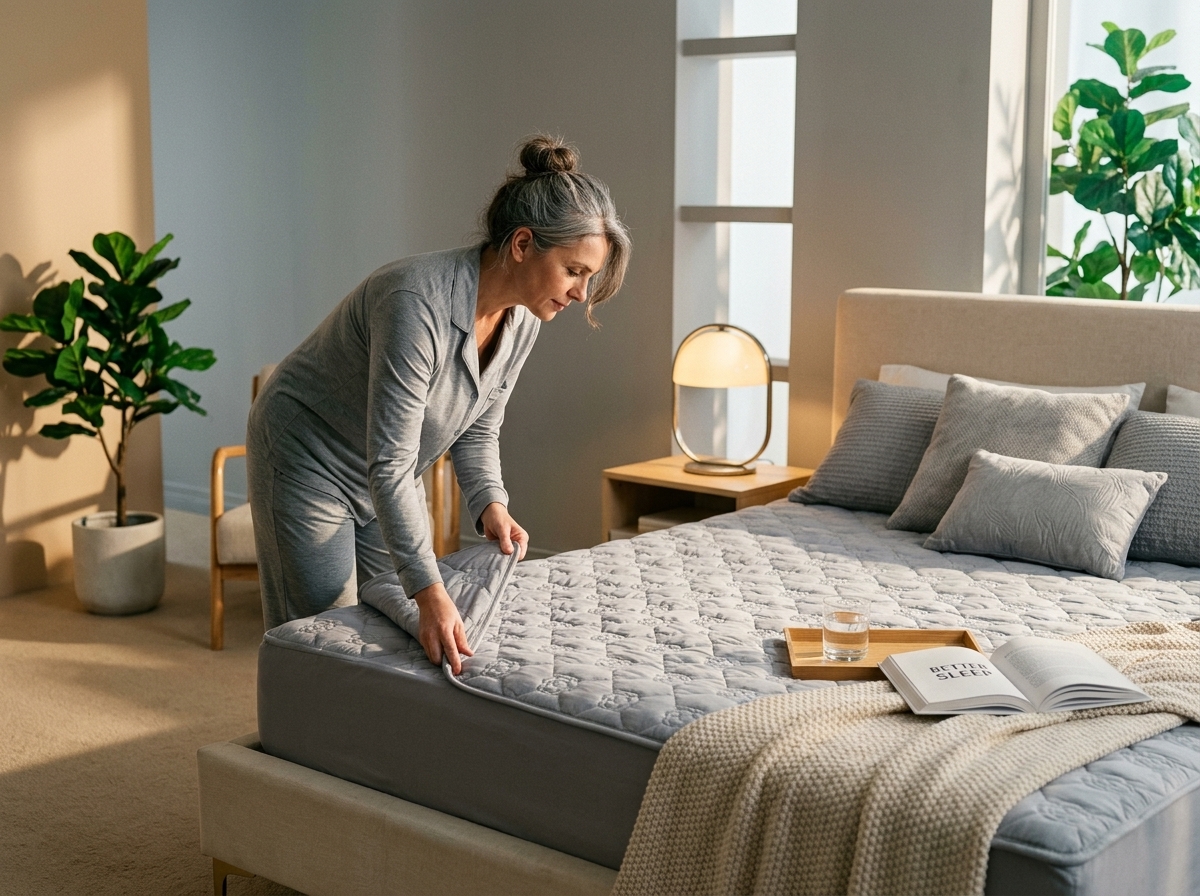
Can I use a cooling mattress pad without replacing my mattress? Yes. Perfect Sleep Pad is designed to sit on your existing mattress beneath the fitted sheet.
Does colder always mean better sleep? No. Temperature research includes benefits from gentle warming under specific conditions. The goal is personal comfort, rather than the lowest possible setting.
Does the pad control my body temperature? The system controls circulating water temperature to influence the sleeping surface. It does not directly measure or precisely control your core body temperature.
Can couples set different temperatures? Yes, with dual-zone options. Each side of the bed can be set separately. See the King and Queen configurations.
More questions? Visit the Perfect Sleep Pad FAQs.