
Why am I always cold at night?
You feel cold at night mostly because your core body temperature naturally drops in the evening to help you sleep, while the room is also cooler and you’re lying still. Thin or cotton-heavy bedding, drafts, damp skin, age and low body mass make it worse. Some medical conditions, such as an underactive thyroid or anemia, can also make you feel cold.
If you’re the person in the house who wears socks to bed in October and still wakes up cold, you’re not imagining it. Here are the common reasons, starting with the most likely.
1. Your body temperature drops at night on purpose
Your core temperature follows a daily rhythm. It falls in the evening and is at its lowest in the early morning hours. That drop helps you fall and stay asleep. The downside is that you feel the cold more at 3 a.m. than at 3 p.m. More on this in how circadian rhythm affects body temperature.
2. The room is cooler than you think
Many homes turn the heat down overnight, which is smart for energy bills. The Sleep Foundation suggests around 65°F for most sleepers, with a common range of 60–67°F (Sleep Foundation). If you naturally run cold, the low end of that range may feel too cool without a warm bed.
3. Your mattress is pulling heat from you
A mattress sits at room temperature, and your body has to warm it. Foam and the air pockets in a mattress insulate, but in the first part of the night your body heat is soaking into the surface. That’s why the bed feels coldest when you first get in.
4. You’re lying still
Muscles make heat when they work. Once you’re lying still, your body produces less heat than when you were moving around, so a temperature that felt fine on the couch can feel chilly in bed.
5. Damp skin or sweat, then chill
If you go to bed slightly sweaty, or overheat under a heavy duvet and sweat early in the night, the moisture cools you later. People who sweat and then shiver often have bedding that’s too heavy, not too light. See comforter too hot for that cycle.
6. Age
Temperature regulation becomes less robust with age. A study of more than 11,000 nights of sleep in adults aged 65 and over found their sleep was most efficient in warmer bedrooms, around 68–77°F, than the usual advice suggests (TODAY, reporting on Science of the Total Environment).
7. Low body mass or a small frame
People with less body fat or muscle have less insulation and generate less heat at rest, so they often feel colder than a partner in the same bed.
8. A medical reason
Feeling cold all the time, not just at night, can be linked to conditions such as an underactive thyroid, anemia, or circulation problems, and to some medicines (Cleveland Clinic). If you’re cold even in a warm room, or the cold comes with fatigue, weight changes, hair loss, numbness or color changes in your fingers and toes, talk to your doctor.
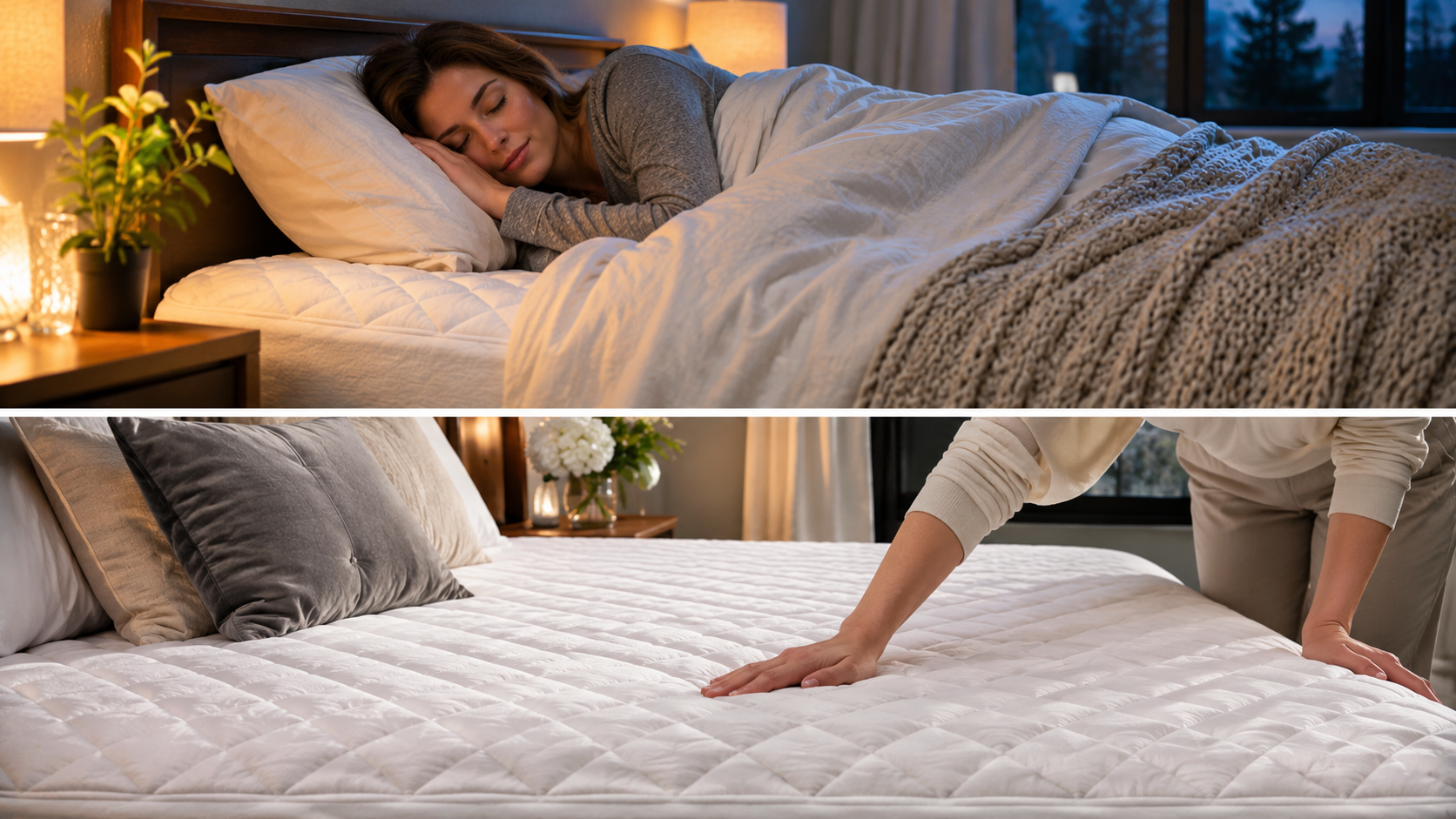
Find Your Ideal Sleep Temperature
How to stop feeling cold at night
- Warm the bed before you get in, and keep the room cool.
- Use flannel sheets and a light wool layer instead of piling on heavy duvets.
- Warm your feet: socks, a foot soak, or warming the foot of the bed. See cold feet in bed.
- Have a warm drink (not alcohol) and a short walk an hour before bed.
- If you share a bed with someone who runs hot, use a dual-zone setup so you can each set your own temperature.
From the mattress designer
In almost every couple I’ve worked with, one person is the cold sleeper. Turning up the thermostat makes the other one sweat. The fix that works is warming the cold sleeper’s side of the bed, not the whole room.
FAQ
Why am I cold at night but fine during the day?
Your core temperature naturally falls in the evening, you’re less active, and the room is usually cooler. All three add up at night.
Is being cold at night a sign of illness?
Usually not. But being cold all the time, along with other symptoms like fatigue or numbness, is worth a doctor’s visit.
What temperature should my bedroom be if I’m always cold?
Many people sleep well around 65°F. If you run cold, keep the room in that range and warm the bed itself, rather than heating the whole house.
Why do I wake up cold at 3 a.m.?
Your core temperature is near its lowest in the early morning, and that’s when blankets have often slipped off.

Comments are closed.